
Kindness is a lot more efficient than unkindness
Imagine a world where we teach kindness as a very effective survival skill.

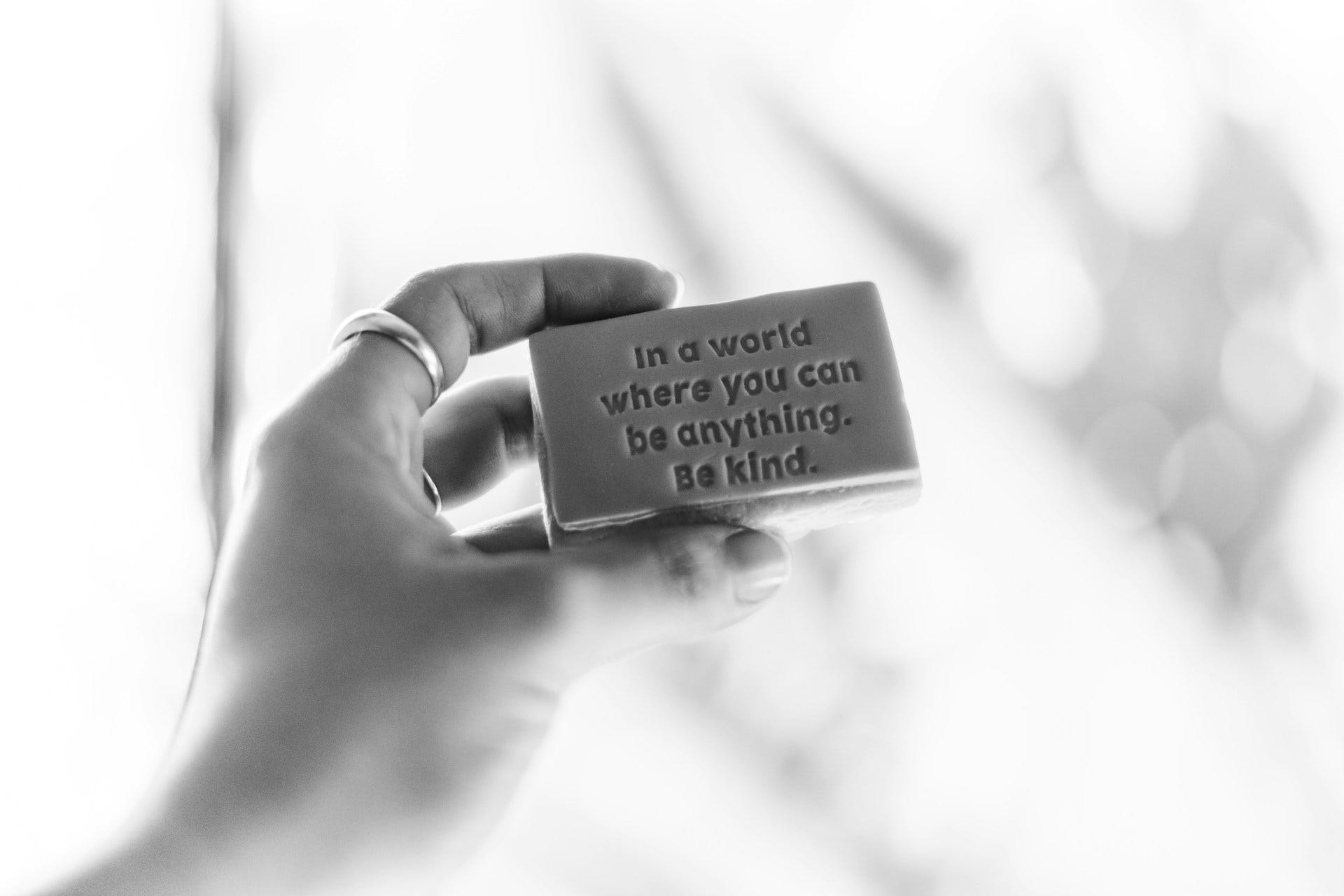
Every day, I engage in at least one act of kindness. I say, “Good morning”. I acknowledge others. I accept and respond to requests for help. I fix things. I install things. I put things back where they were when I’m done. These are all little things, and they all require kindness to implement. Kindness makes the world go round.
I’m not a very physically strong person. I never have been. I was bullied in school. I didn’t know how to socialize. I’m hearing impaired and blind in one eye. My sensory perception leaves room for uncertainty. Lots of room. So I tend to err on the side of peace.
Happy people get what they want. Long ago, I came to the conclusion that kindness is more efficient for getting what I want than force.
As a general rule, I don’t tell people what to do. I may offer suggestions, but I don’t enforce my requests with force, threats of force or something else to make another person change their behavior. I just change my behavior.
I try kindness as the first resort. If I make a request, and there is no response, I assume ignorance before malice. I assume that the recipient of my request lacks the capacity to respond. I assume that they are doing the best that they can. I begin to probe for deficits in skills and capacities because I need their cooperation, not defiance.
In all cases, and I can’t think of any exceptions, when things don’t go well, I find a deficit of skills or capacities, or both. I’m not interested in blaming anyone because blame leads to shame. Shame implies that someone knew better, or could have done better than they did.
If someone failed but they could have done better, why didn’t that someone do better? Was there some hidden capacity that we didn’t know about? Was that someone hiding their capacity to do better for fear of setting expectations too high? Maybe worried they might have to repeat their performance? Or maybe withholding “doing better” out of spite?
I’m flashing on Walter Matthau in The Bad News Bears, a classic movie. His character, Mr. Buttermaker, engages in a useful discussion about assumptions. He said if you assume something about someone else, or what someone else will do, you can make an “ass” out of “u” and “me”.
That attitude is a sign of our punitive culture. Our punitive culture includes shame. A punitive culture assumes we know better, we can do better, and that we have a right to punish people who fail.
Thinking that someone could do better than they are doing is an assumption. We don’t know what struggles other people are going through. When people fail, I consider the possibility that other factors are at work besides “should have known better”, or “he’s just being obstinate and rude”. Then I consider what kindness can do.
I can’t think of an example where an act of kindness on my part did not improve the performance of someone else. If someone is failing, and I acknowledge their struggle with forgiveness, offers of help, or even empathy by saying, “I’ve had days like that”, their performance almost always improves. It’s almost like once I recognize that someone is struggling, and acknowledge it in some way, a nice way, they find some other capacity to do better.
I know it seems strange to say this, but at my work, I’m paid to be kind. I work in customer service. I support enterprise software for customers who are paying a princely sum for support. My job is to make their day go better. My job is to help customers resolve problems in software that they don’t have the capacity or skills to solve. And I do that with kindness.
I like being kind to people. Being paid to be kind to people is a bonus.
In my job, there are no inconvenient customers. There are no irritating customers. There are no high maintenance customers. They write my check.
Every customer has different skills and capacities. My job is to adapt to each of them. My job is not to make them feel ashamed for their lack of capacity, or to punish them for not fixing the problem they came to me to solve. My job is to fix those problems with kindness.
In my job, kindness is more efficient than force, or being unkind. Force leads to deficits in cooperation, kindness leads to abundance in cooperation. Our capacity to cooperate depends on the kindness of other people. We get the juice from our brains when we’re kind because natural selection favors kindness.
3.5 billion years of experience has made life very efficient. Plants make food from sunlight and dirt. Humans can go for months without food and still live. We can still think better than AI and do so on far less power than AI consumes. Humans can choose to be kind or not. I’m not sure about AI yet.
When people are being unkind, I see that as a weakness. I see unkind acts, acts of violence, deprivation and deception, as acts of desperation. People tend to be unkind to each other when they believe their needs are not being or will not be met. People will be unkind to each other if they believe that’s how they must get their needs met. People learn to be unkind to others from other people. We can teach kindness or not.
Human beings have a gift for imitation. I had a friend once who had a laugh I liked. I adopted a part of his style of laughter. I had another friend who had a turn of phrase that I liked. I adopted his turn of phrase. I even adopted some of his writing style because I admired it.
If I walk in a hallway at work and I smile at someone going the other way, they smile back. That exchange was not just imitation, it was free.
I am mindful of our gift of imitation. I know that if I’m unkind to others, they will be unkind to me. If I neglect them, they will neglect me. If I yell, they yell. If I’m mean, they’re mean. If I smile, they smile. If I help, they help.
I have come to believe that the universe is a reflection of everything that I’m thinking and feeling right now. So I’m mindful to think of what I want, not what I don’t want.
I engage in kindness not just because I want to be kind. I am kind because I am thinking about consequences I know about, and the consequences that I cannot foresee.
The consequences of kindness are easier to anticipate than the consequences of unkindness. A calm person at peace is easier to predict than an unhinged person deep in rage. It is easier for me to think and use logic in kindness than in rage, anger or spite.
I would rather apply logic to my circumstances than emotion. Emotions can motivate me but I’ve learned to act after the feeling passes. For best results, I act on a logical assessment of the potential outcomes. I err on the side of peace with logic. Logic tells me that kindness leads to peace.
Write on.